





Cancer is a disease that occurs when changes in a group of normal cells within the body lead to uncontrolled, abnormal growth forming a lump called a tumour. If left untreated, tumours can grow and spread into the surrounding normal tissue or to other parts of the body via the bloodstream and lymphatic systems. This can affect the digestive, nervous, and circulatory systems or release hormones that may affect body function.
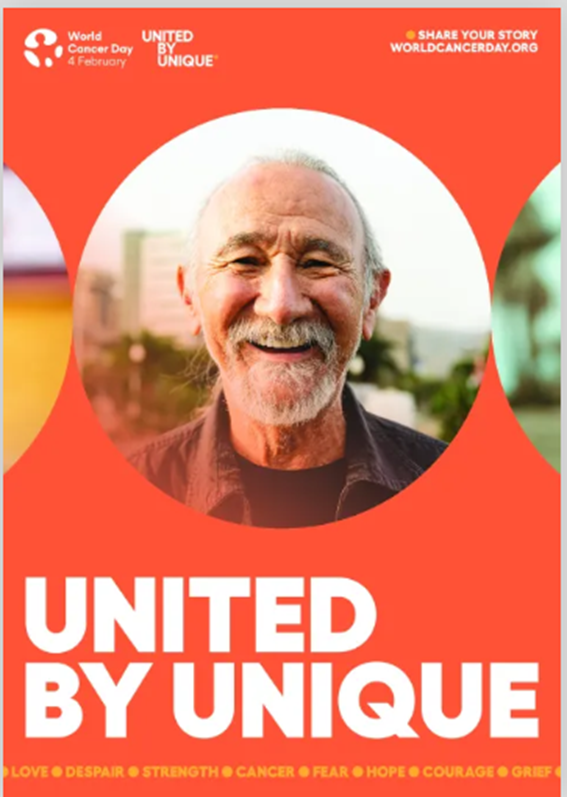
4th February 2026 is World Cancer Day. The World Cancer Day theme is “united by unique”. It places people at the centre of care and seeks to highlight the importance of individual experience. The World Cancer Day website contains information, campaign material and personal stories. With regard to the theme of patient centred care it identifies a number of principles. These include: Principle 1, To build a compassionate and responsive cancer care system, people living with cancer must be actively engaged and involved in shaping services, care practices, and health policies. Their lived experience, along with insights from caregivers and advocacy groups, can help identify challenges and drive improvements.A system cannot respond to the needs of people living with cancer if it is not created in collaboration with them. Principle 2, Care must be continuous, coordinated, and compassionate – extending through treatment, survivorship, and end-of-life, addressing long-term impacts, dignity, health literacy and support for patients and families. Principle 3, Decision-making must be equitable and inclusive, addressing barriers like geography, language, income, disability, and stigma. Cancer strategies should involve patients to ensure services are accessible and culturally sensitive. Principle 4, Creating the conditions for change requires action across the entire health and cancer care system. This includes strong leadership, appropriate and supportive policies and regulations, systems that reward quality and collaboration, and a workforce ready to deliver new models of care.
LSHTM is at the forefront of cancer research, providing educational opportunities and conducting vital studies that address cancer survival and inequalities in outcomes.
LSHTM’s research includes analyzing trends and inequalities in cancer survival across different socioeconomic, racial, and ethnic groups. The findings from these studies help inform policymakers to target investments in cancer services effectively. A recent study led by the London School of Hygiene and Tropical Medicine (LSHTM) and funded by Cancer Research UK, meticulously analysed long-term trends in the cancer survival index (CSI) for adults across England and Wales. Covering the period from 1971 to 2018, the research utilised records from the National Disease Registration Service for England and the Welsh Cancer Intelligence and Surveillance Unit, estimating net survival for up to 10 years after diagnosis for approximately 10.8 million people.
The CONCORD programme is a global initiative led by LSHTM that monitors cancer survival trends worldwide, providing valuable insights into the effectiveness of healthcare systems in delivering cancer care. The CONCORD programme is endorsed by 40 national and international agencies, including WHO EURO, the Organisation for Economic Co-operation & Development (OECD) and the World Bank. The CONCORD Steering Committee includes scientists and cancer patients from 13 countries, with expertise in biostatistics, epidemiology, cancer registration and public health. The third cycle of the programme, CONCORD-3, has updated the global surveillance of trends in cancer survival to include patients diagnosed up to 2014 in more than 70 countries. The results cover 18 of the most common cancers. These cancers represent 75% of all the cancers diagnosed world-wide each year.
The BEYOND Cancer research group at LSHTM focuses on understanding the long term physical and mental health impacts of cancer diagnoses and treatments on survivors. This research aims to identify opportunities for disease prevention and improve the quality of life for cancer survivors. The primary research focus is examining how cancer history and treatment influence both physical and mental health outcomes in the survivor population. Their work is supported by grants from Wellcome, the Royal Society, Cancer Research UK, and the Medical Research Council.
There is also the Cancer Survival Group, a vibrant group of some 30 researchers from 15 countries. They have been examining trends and inequalities in cancer survival in the UK and other countries for 20 years.
The Library collections contain print and online resources on the topic of cancer. Resources can be found by searching in the Library’s search tool, Discover. A selection of books and posters for selected journals on this topic are on display in the Library’s Reading Room.
