Skip to content

All posts tagged Rare Books

Dr Amolak Ram Mehta (1894-1986): his journey from London School of Tropical Medicine (LSTM) student to Deputy Director-General of Health Services for the Government of India. LSHTM Library Rare Books Blogs No. 17. September 2026

Amolak Ram Mehta was born in a village near Lahore in 1894 in what is now the Punjab Province of Pakistan. He studied medicine at King Edward Medical College in Lahore before travelling to England in 1920 to further his medical education. His journey by sea from India, reflections on…
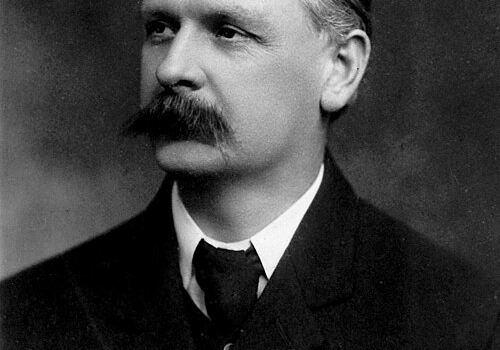
James Lind (1716-1794): naval surgeon and physician who specialized in the treatment of seamen’s diseases.  LSHTM Library Rare Book Blogs No. 16 June 2026.

James Lind is one of the names of 26 men and women, pioneers of public health and tropical medicine, on the frieze of the London School of Hygiene & Tropical Medicine (LSHTM) building in Keppel Street.

Lind’s name on the Frieze around the building at Keppel Street. More information…

From the cradle to the grave: reflections on LSHTM Library’s historical collections. LSHTM Library Rare Book Blogs No. 15. April 2026

The phrase ‘From the cradle to the grave’ was popularised by Winston Churchill, the British Prime Minister, in 1943 to describe the ambition of a welfare state that would provide security from birth to death.

With the School’s mission supporting the aims of a national health service, it is…

SUNSHINE: how Sir Leonard Hill promoted access to the open air and sunshine in England in the 1920s. LSHTM Rare Book Blogs No. 15. February 2026

From the Sun King (Louis XIV) in 17th century France, who chose the sun as his personal emblem, to strains of The Temptations’ 1964 song ‘My Girl’ — “I’ve got sunshine on a cloudy day” — the sun has long been recognised for giving life to all things and its positive…

Victims of fashion in Victorian Britain. Advice on dressing for a healthy life in 1885 by Ada S. Ballin in her book ‘The science of dress in theory and practice’. LSHTM Library Rare Book Blogs No. 13. August 2025.

‘She sells seashells on the sea shore’

This nineteenth century tongue twister was inspired by the popularity of seaside holidays, as shown in these engravings:

Seaside scene

Seaside activities

Sea bathing had long been extolled for its health-giving benefits, but it was really only accessible to the upper classes…

Bulinus – the tropical freshwater snail ‘missing’ from LSTHM’s pantheon of gilded vectors. LSHTM Rare Book Blogs Series No. 12. June 2025.

The London School of Hygiene & Tropical Medicine in Keppel Street, Bloomsbury was opened in 1929. The balconies on the first floor of the building, outside the Library, are decorated with a frieze of sculptures of ten animals – seven insects, a tick, a snake and a rat  –  responsible…

LSHTM Library celebrates South Asian Heritage Month July 18-August 17 2024. LSHTM Library Rare Book Blog Series No. 11. August 2024

South Asian Heritage Month takes place every year ending on the anniversary of Partition of the Indian Sub-Continent on 17 August 1947 by which the Indian subcontinent was divided into India, West Pakistan (now Pakistan) and East Pakistan (now Bangladesh).

In the LSHTM Library there are numerous books about…

Eleanor Anne Ormerod (1828-1901) : agricultural entomologist and an early authority on insect pest control. LSHTM Rare Book Blog series No. 10. June 2024

From the seventeenth century, women have played a small but significant role in exploring the world of insects by listing, drawing, and collecting them. Some women have also observed and recorded the extraordinary life histories of insects. Eleanor Anne Ormerod (1828-1901) did all this before becoming the first woman…

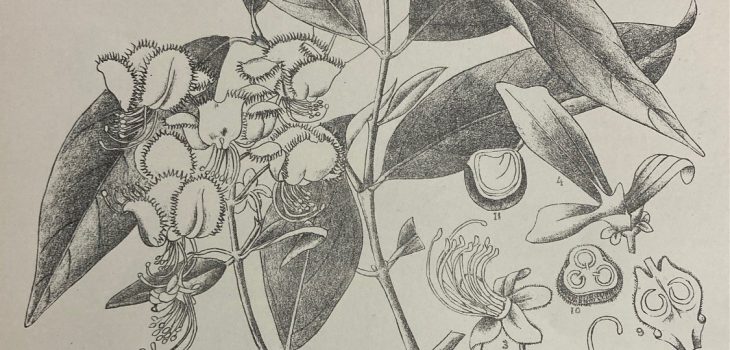
Indian medicinal plants : an early twentieth  century illustrated reference book by the Indian physicians K.R. Kirtikar and B.D. Basu LSHTM Rare Book Blog series No. 9. February 2024.

In those parts of the world with a written language, the first organisms in the natural world to be studied, documented and figured were plants in recognition of their economic value in agriculture, nutrition, health and well-being.  In Europe these herbals, as they are called, were hand-written in…

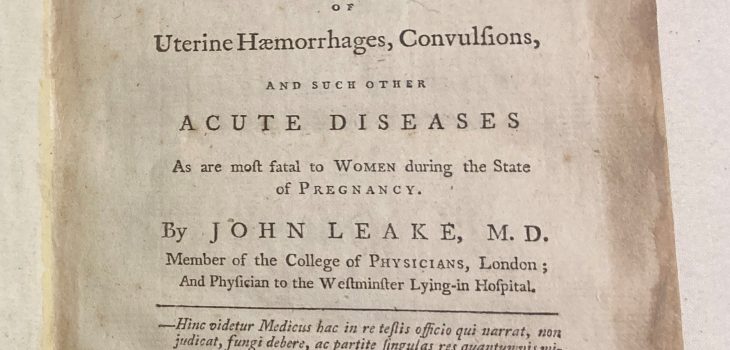
Understanding puerperal fever in the eighteenth century : the work of John Leake (1729-1792), man-midwife. LSHTM Rare Books Blog No. 8 January 2024.

In the 18th and 19th centuries and until the 20th Century the death of women in childbirth or shortly afterwards was a common occurrence. One early treatise on puerperal fever was written by John Leake, a physician and male midwife:  Practical observations on the child-bed fever, first published in…