
From the Sun King (Louis XIV) in 17th century France, who chose the sun as his personal emblem, to strains of The Temptations’ 1964 song ‘My Girl’ — “I’ve got sunshine on a cloudy day” — the sun has long been recognised for giving life to all things and its positive effect on mental and physical health. One of the first scientists to promote it was the British physiologist, Sir Leonard Hill.
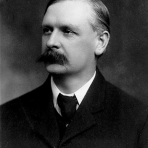
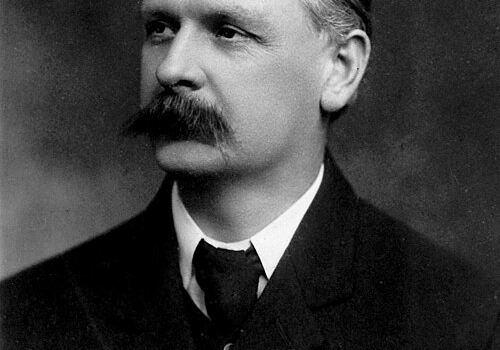
Sir Leonard Erskine Hill (1862-1952), FRS, studied medicine at University College London before taking up a teaching position at the London Hospital Medical School. He was Director of Applied Physiology at the National Institute of Medical Research at Hampstead, London from 1914-1930. He died at Corton, near Lowestoft, on 30 March 1952.
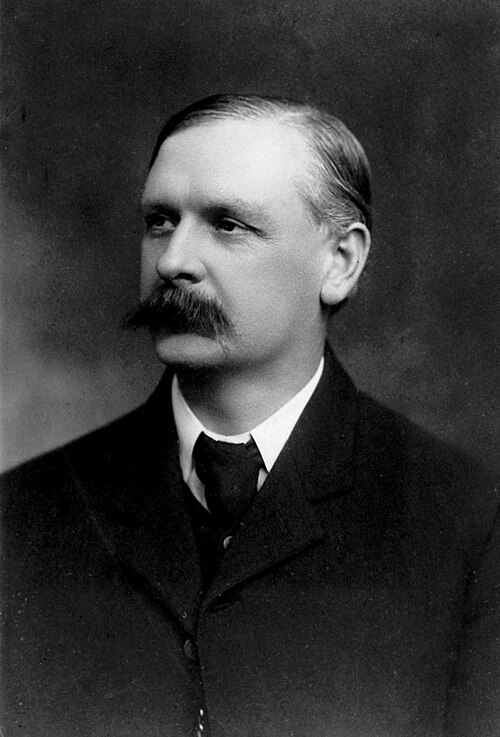
Portrait of Sir Leonard Hill – Wellcome Collection (licensed under Creative Comms – CC BY 4.0)

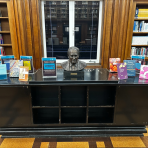
Hill did not work at LSHTM but his son, Sir Austin Bradford Hill (1897-1991), epidemiologist, worked at the School from 1933-1961 and was Chair of Medical Statistics from1945. In his honour, room LG08 of the LSHTM Keppel Street building is named the Bradford Hill Room.
Sir Leonard Hill was a practical man who possessed the technical skills to design his own experiments and the research methodology to analyse the results. One of Hill’s first challenges was to investigate the hazards associated with the rapid decompression of divers causing compressed-air illness or the bends, but it is for his later work on ventilation that he is best remembered. Hill analysed air-quality in factories where people worked in crowded, ill-ventilated rooms in which high temperatures were the norm and ‘germs’ circulated. Using the kata-thermometer, that Hill had invented in 1913, he measured heat loss from the body in different circumstances. He showed that in workplaces with poor air circulation and high room temperatures a worker’s efficiency slowed in comparison with places where the air was circulating. He described this effect in his book Health and environment co-authored with James Argyll Campbell (1884-1944), a physiologist.
At the end of World War One, Hill turned to study the nation’s health and found that while infant mortality had improved due to welfare work, adult health had not. Soldiers who had seen active service and agricultural labourers – both groups exposed to working in the open air – had noticeably better, more robust health than people working indoors, Hill observed. Hill’s solution was to recommend the revival of physical exercise in the open air and the establishment of clubs for organized exercise regimes. Hill’s advocacy of the benefits of sunshine is mentioned in Health and environment in only a few pages.
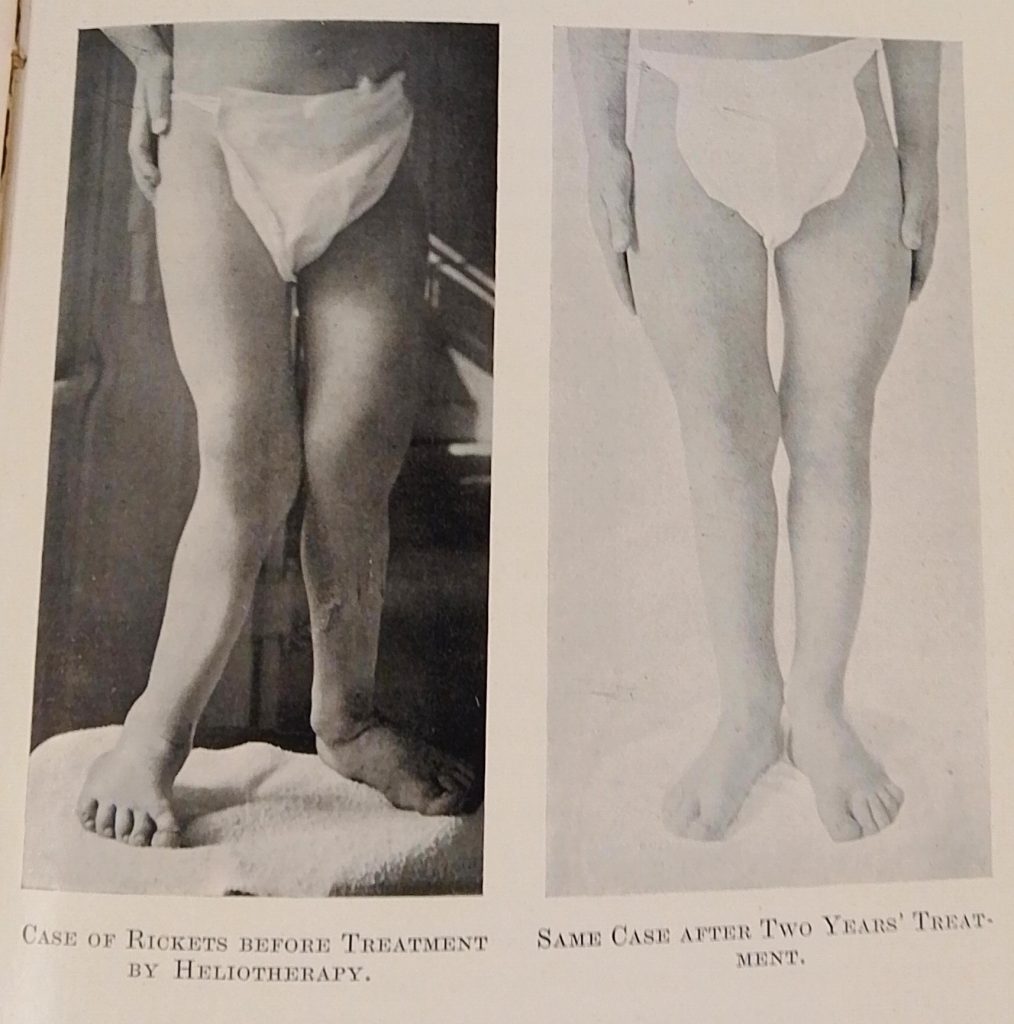
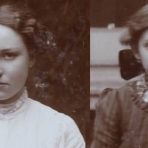
Photo showing child patient with symptoms of rickets and after treatment by heliotherapy (Plate VII, opposite p. 142 in Hill and Campbell 1924)
One year earlier in 1924, Hill published Sunshine and open air allowing him to expand and develop his theories. The theme was picked up by The Times in May 1928 which issued a 40-page supplement “Sunlight and health” replete with illustrations and advertisements. One firm responded to the movement by developing a special type of glass – Vita glass. Vita glass was ideal for windows as it was permeable to ultraviolet radiation allowing for bodily exposure to sunlight even when indoors and clothed.
Human reaction to the state of the weather – now called meteorosensitivity – dates to the Greeks, who believed there was a close connection between physical and mental health and the weather. You cannot change the weather, but you can improve your well-being by following Sir Leonard Hill’s advice: go outside for the light and open windows to let in fresh air.
References:
DALE, H.H., 2004. Hill, Sir Leonard Erskine, in Oxford Dictionary of National Biography 27: 152-153.
HILL, L., 1924. Sunshine and open air, their influence on health, with special reference to the Alpine climate. London: Edward Arnold.
HILL, L., Sir & CAMPBELL, A., 1925. Health and environment. London: Edward Arnold (LSHTM SB 1925)
LSHTM Library Rare Books Collection Blogs is an occasional posting highlighting books that are landmarks in the understanding of tropical medicine and public health. The Rare Books Collection was initiated by Cyril Cuthbert Barnard (1894-1959), the first Librarian, from donations and purchases, assisted with grants from the Carnegie United Kingdom Trust. There are approximately 1600 historically important rare and antiquarian books in the Rare Books Collection.
Many of the LSHTM Library’s rare books were digitized as part of the UK Medical Heritage Library. This provides high-quality copyright-free downloads of over 200,000 books and pamphlets for the 19th and early 20th century. To help preserve the rare books, please consult the digital copy in the first instance.
If the book has not been digitized or if you need to consult the physical object, please request access on the Library’s Discover search service. Use the search function to find the book you would like to view. Click the title to view more information and then click ‘Request’. You can also email library @lshtm.ac.uk with details of the item you wish to view. A librarian will get in touch to arrange a time for you to view the item.
Researchers wishing to view the physical rare books must abide by the Guidelines for using the archives and complete and sign a registration form which signifies their agreement to abide by the archive rules. More information is available on our Visiting the Archives webpage.
