





New research shows improving nutrition could prevent child stunting, reduce chronic disease, and protect national income in two countries facing different stages of the nutrition transition.
Unhealthy diets are now recognised as a leading contributor to global ill health, linked both to persistent undernutrition in early life and to rising levels of obesity and diet-related non-communicable diseases in adulthood. Limited access to diverse, nutrient-rich foods, alongside increasing availability of highly processed products high in salt, sugar, and unhealthy fats, has created a dual burden that affects health outcomes, productivity, and long-term economic development across many low- and middle-income countries.
Unhealthy diets are driving significant health and economic losses in Ethiopia and the Philippines, according to new research examining how nutrition affects child growth, non-communicable disease, and long-term productivity. The study published in Oxford University Press estimates that diet-related health problems could reduce national income by around 2.5% of GDP in the Philippines and 3.1% in Ethiopia, highlighting the scale of preventable damage associated with poor nutrition.
Researchers analysed two main pathways linking diet to economic outcomes: childhood stunting, which affects physical development, education, and lifetime earnings, and adult non-communicable diseases such as heart disease, diabetes, and cancer driven by metabolic risk factors. They found that improving diets alone could eventually prevent up to 45% of stunting-related losses in the Philippines and 50% in Ethiopia, while also reducing around one-fifth of the economic burden associated with metabolic risks and premature mortality.
The findings reflect different stages of the nutrition transition. Undernutrition and limited dietary diversity remain the dominant challenge in Ethiopia, where stunting accounts for a large share of economic loss. In contrast, the Philippines is experiencing rising levels of obesity, hypertension, and diabetes, shifting the burden towards chronic disease. Despite these differences, both countries face growing and largely preventable health and financial costs linked to unhealthy diets.
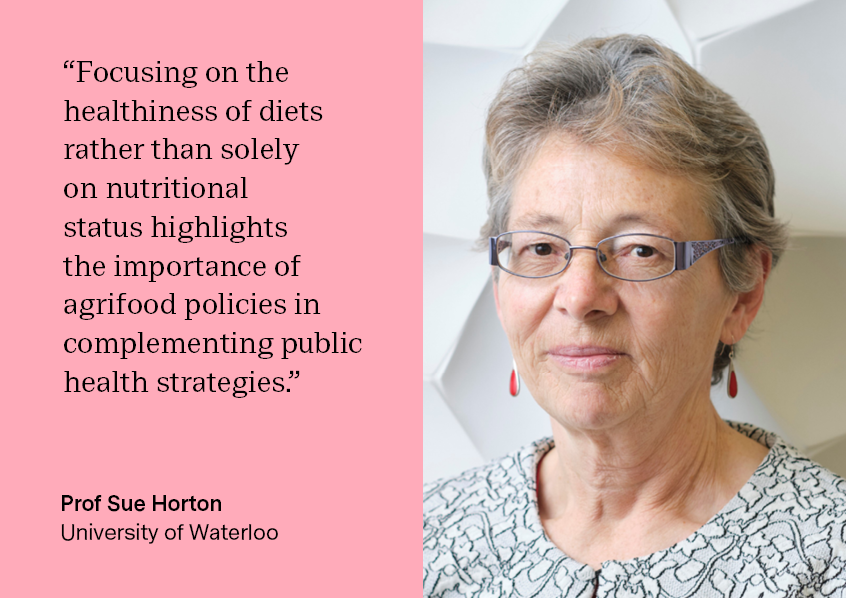
Sue Horton, Professor Emerita at the University of Waterloo, is the first author of this paper. Her work focuses on economic aspects. She is globally recognised for advancing understanding of how economic evidence can inform better investment, policy, and prioritisation in public health and healthcare systems.
She said: “Focusing on the healthiness of diets rather than solely on nutritional status highlights the importance of agrifood policies in complementing public health strategies. Reducing these losses will require coordinated action beyond healthcare alone, including stronger food-system policies, improved access to diverse and nutritious foods, and public health measures that promote healthier diets and lifestyles. Without comprehensive nutrition action, the societal and economic burden associated with poor diets is likely to continue rising.”
Publication
Sue Horton et al. ‘How much can healthier diets reduce future economic and human costs? Results from Ethiopia and the Philippines’. Oxford University Press 2026. DOI: https://doi.org/10.1093/heapol/czag018