



Skip to content

All posts in Uncategorized

What gets missed when causes of maternal deaths are explained: Insights from Tanzania

A new study examining maternal death reviews in Tanzania is raising important questions about how health systems identify and learn from maternal deaths, and whether current approaches may be overlooking the bigger picture. 

The study, led by Kerstin Almdal and published in the journal Health Policy and…

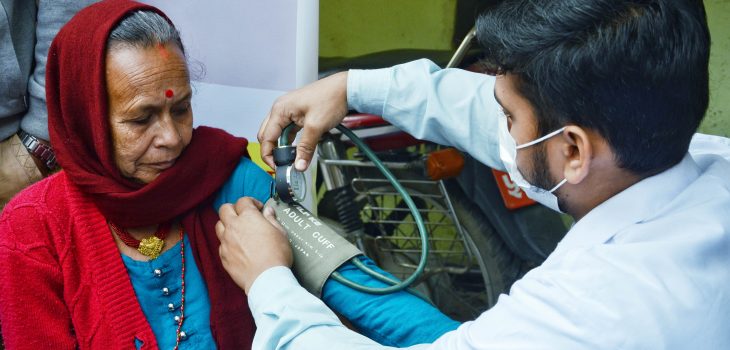
Understanding health system capacity for hypertension care in rural coastal Kenya

The growing burden of non-communicable diseases (NCDs) in low- and middle-income countries presents significant challenges for health systems that were historically structured to address infectious diseases.

Hypertension is among the leading contributors to cardiovascular morbidity and mortality, yet the capacity of primary healthcare systems to provide consistent hypertension…

Powering One Health through Science in South-East Asia

In this blog, Dr Catharina C Boehme discusses the critical role of science-driven collaboration in advancing One Health and strengthening health security in South-East Asia

World Health Day (WHD) is an annual global awareness campaign observed on April 7 to mark the founding of the World Health Organisation…

PM Modi warns of the threat from antimicrobial resistance

By Dr Catharina Boehme, Officer-in-Charge, WHO South-East Asia Region

PM Modi warns of the threat from antimicrobial resistance

In December 2025, Prime Minister Narendra Modi issued a timely warning about one of the most serious yet under-recognised global health threats: antimicrobial resistance (AMR). PM Modi alerted…

A Chinese conundrum: Does higher insurance coverage for hospitalization reduce financial protection for patients who need it?

By Xiaoying Zhu (Nossal Institute for Global Health, The University of Melbourne; School of Elderly Care Services and Management, Nanjing University of Chinese Medicine)

Background

The hospitalisation rate of residents in China has been steadily rising

The politics of crisis, alcohol and policy formulation

By Mumta Hargovan, Leslie London & Marsha Orgill (University of Cape Town)

Alcohol is deeply entangled in the social, political and economic history of South Africa (SA). There is a high prevalence of heavy episodic drinking (binge-drinking) and related harms, including a costly burden of injuries and trauma on…

India’s thirty years of investing in research for health

Dr Eti Rajwar1 and Prof Sandy Oliver2

1Public Health Evidence South Asia, Prasanna School of Public Health, Manipal Academy of Higher Education, India
2EPPI Centre, Social Research Institute, University College London, UK                  

August 2023


“Change is inevitable, growth is optional!”- John C Maxwell

It is famously said that ‘Change…

Second Call for Papers: From COVID-19 to stronger people-centred and equitable health systems: HPSR from LMICs

Health Policy and Planning launched a call for papers in 2020 on the basis of a Commentary in which we proposed a research agenda for Health Policy and Systems Research (HPSR) linked to COVID-19. The call led to a number of publications, which have ranged from studies on the…

People-centered strategies for the management of drug-resistant tuberculosis is not sexy enough science

By Uzma Khan (IRD Pakistan; Karachi, Pakistan and IRD Global; Singapore, Singapore)

Since 2011, the World Health Organization (WHO) has recommended treating patients affected with drug-resistant tuberculosis (DR-TB) using a clinic- or community-based ambulatory care model. However, low- and middle-income countries (LMICs) continue to struggle to…

Call for abstracts: Rethinking External Assistance for Health

Background
In a recently published Commentary in Health Policy and Planning, we discuss how the COVID-19 pandemic and its economic consequences have raised questions about the availability, design, implementation, and accountability of external assistance for health. We argue that these questions have made urgent the need for a fundamental…