




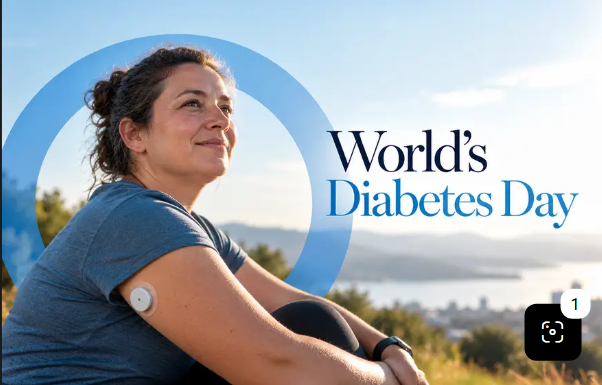
Image shows a woman sitting in nature, smiling, with a blue circle behind her.
The increase in the global prevalence of diabetes makes it an important and growing health care problem in most countries. “Diabetes affects an estimated 828 million people worldwide; prevalence is growing rapidly in low- and middle-income countries (LMICs), with major health and development consequences. Diabetes-related complications and mortality rates have declined across several high-income countries (HICs), largely through structured chronic disease care, sustained implementation of quality improvement strategies, and active risk factor control.”K.M. Venkat Narayan, , Corresponding author[email protected]. Global Diabetes: Rapidly Changing Landscape and a Rising Tide of Opportunities: The 2025 Distinguished International Service in the Cause of Diabetes Award Lecture, Diabetes Care 2026;49(8):1297–1307.
The widespread adoption of the Western life style, including reduced levels of exercise and increasing unhealthy eating habits comprising a calorie-rich, high fat, high sugar is a likely factor in the increase of diabetes in low- and middle-income countries (LMICs).
The World Health Organisation encourages people to research diabetes so they can recognise the symptoms. They also identify communication as key to diagnosis. Those living with diabetes are invited to share their experience with others by joining the conversation on social media: #ActEarlyOnDiabetes #WorldDiabetesDay
The 2026 World Diabetes Day theme is “Early action on diabetes” .This highlights the importance of earlier diagnosis, access to comprehensive care and reducing diabetes stigma.
Closing the gap in diagnosis is a global priority. One of the five global diabetes coverage targets supported by WHO Member States sets a target for 80% of people with diabetes to be diagnosed by 2030.
For the first time ever, WHO Member States have supported the creation of global targets for diabetes, as part of recommendations to strengthen and monitor diabetes responses within national noncommunicable disease (NCD) programmes.
The 5 new targets set the standard that, by 2030:
- 80% of people with diabetes are diagnosed;
- 80% of people with diagnosed diabetes have good control of glycaemia;
- 80% of people with diagnosed diabetes have good control of blood pressure;
- 60% of people with diabetes of 40 years or older receive statins; and
- 100% of people with type 1 diabetes have access to affordable insulin and blood glucose self-monitoring.
The aim is to reduce the risk of diabetes, and move towards a world where all people who are diagnosed with diabetes have access to equitable, comprehensive, affordable and quality treatment and care.
You can read more at the WHO Newsroom
The Library collections contain print and online resources on the topic of diabetes. Many books are now online as e-books. Resources can be found by searching in the Library’s search tool, Discover. Sign in to Discover for seamless access.
