




A new study examining Iran’s health policymaking under prolonged economic sanctions and the COVID-19 pandemic highlights the importance of anticipating risks and building resilience into health policies before crises occur
A new study examining Iran’s health policymaking under prolonged economic sanctions and the COVID-19 pandemic highlights the importance of anticipating risks and building resilience into health policies before crises occur. The paper is part of a special supplement of Health Policy and Planning (HPP) and the Health Systems Global (HSG) community, exploring how research, policy and practice can advance justice and sustainability in health systems.
The study, led by researchers Reza Majdzadeh and Haniye Sadat Sajadi, analysed seven empirical studies, including policy analyses, document reviews, interviews and expert consensus exercises. The researchers used an expanded Theory of Change framework to examine how resilience was incorporated into Iran’s health policymaking between 2014 and 2025.
Published in Health Policy and Planning, the analysis found that Iran’s health authorities implemented a range of adaptive measures in response to the pressures created by sanctions. However, responses were largely short-term and reactive, shaped by fragmented coordination, untested assumptions and limited systems for evaluating what worked and applying lessons to future crises.
The researchers found that some weaknesses affecting resilience were already present in the design of health policies. Sanctions were not explicitly recognised as a policy issue in key upstream documents, while major health reforms did not include specific measures to address the risks posed by prolonged economic constraints. The study also found that key assumptions underlying policy design were not sufficiently tested against potential shocks.
These weaknesses became particularly visible during implementation. Disruptions to access to medicines and other essential resources, fragmented governance and short-term planning placed additional pressure on the health system. The COVID-19 pandemic further compounded these challenges, limiting the system’s ability to implement existing policies effectively.
The researchers argue that health system resilience should be understood as more than the ability to respond to a crisis once it has occurred. Resilient systems must also be able to anticipate risks, identify where policies may fail, test different scenarios and learn from evidence as conditions change.
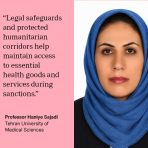
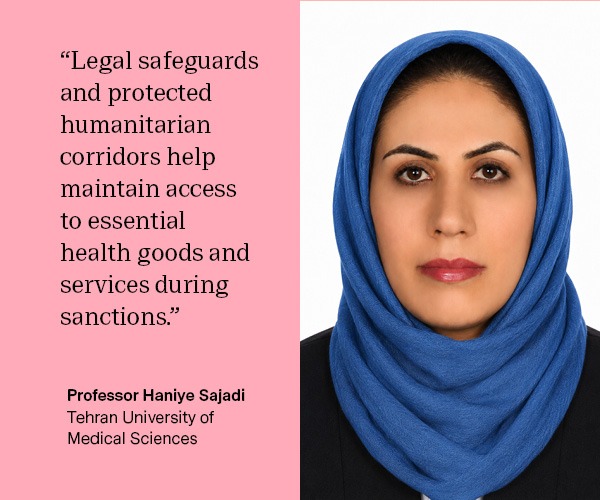
Haniye Sadat Sajadi, Professor at the Tehran University of Medical Sciences and co-author of the paper, said: “The study recommends strengthening risk-informed planning, introducing routine scenario-based resilience testing and developing feedback mechanisms that allow health systems to learn from their responses. It also highlights the importance of international legal safeguards and protected humanitarian corridors to help maintain access to essential health goods and services during sanctions.”
The researchers say that the lessons from Iran may be relevant to other countries facing prolonged economic, political or other external pressures. They argue that building resilient health systems requires a shift away from isolated, short-term interventions towards system-wide approaches that strengthen governance, protect equity and support continuous learning.
The study provides a framework for identifying where health policies may be vulnerable before a crisis occurs, helping policymakers strengthen governance, planning and resource protection to support more just and sustainable health systems.
Listen to the full podcast featuring Reza Majdzadeh and Haniye Sadat Sajadi.