






Research in Dhubri, India, shows how seasonal flooding, unpaid family labour and poorly adapted community participation shape the delivery of nutrition services.
A new study has highlighted how local health systems in Dhubri, Assam, are shaped by the Brahmaputra River, informal support networks and the everyday realities of communities living in a flood-prone region.
The study, published in Health Policy and Planning, explores how nutrition interventions are delivered at village level and how national health policies are adapted to local circumstances. The paper is part of the Health Policy and Planning and Health Systems Global (HPP/HSG) supplement, which examines how health systems can become more just and sustainable.
The researchers conducted 28 in-depth interviews, six focus group discussions and four key informant interviews with frontline health workers, community representatives and people who use nutrition services in Dhubri.
The study found that the seasonal rhythms of the Brahmaputra significantly disrupt the delivery of health and nutrition services. Flooding can isolate communities, damage or destroy Anganwadi Centres, disrupt access to immunisations and nutrition supplies, and make it difficult for frontline workers to reach households. However, the number of households workers are expected to serve often remains unchanged, even when communities are displaced or routes become inaccessible.
The researchers also found that the demands placed on frontline health workers often extend beyond the workers themselves. Family members may help collect supplies, manage communications and support community outreach, effectively becoming part of the health system without formal recognition or pay. The study describes these households as ‘frontline families’, highlighting the financial, physical and emotional costs of the unpaid labour that helps keep services running.
Community participation was found to have both positive and negative effects. Local involvement can help build trust, mobilise resources and support problem-solving. However, community members may also expect frontline workers to take responsibility for problems beyond their control, while participation can reinforce existing inequalities when the voices of poorer and more marginalised residents are less likely to be heard.
The study further found that informal relationships and spaces are central to the functioning of local health services. Informal meetings between health workers, WhatsApp groups and the sharing of equipment help workers coordinate services, solve problems and support one another. These informal systems often compensate for gaps in formal infrastructure and governance, but remain largely unrecognised by policy.
The researchers also found that national nutrition campaigns can become disconnected from local realities. Campaigns that promote expensive or inaccessible foods may leave families feeling excluded or judged, rather than supported. The study suggests that health messages need to reflect the foods, resources and circumstances available to the communities they are intended to reach.
The authors argue that health interventions cannot be understood as simply implementing policies designed at national or regional level. Instead, implementation is shaped by local environments, relationships, histories and everyday challenges.
They call for health policies to better account for environmental vulnerability, recognise the unpaid labour that supports frontline services, provide clearer roles and safeguards for community participation, and strengthen the informal relationships that help health systems adapt.
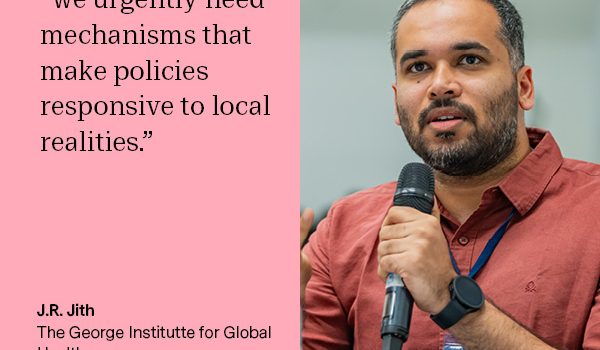
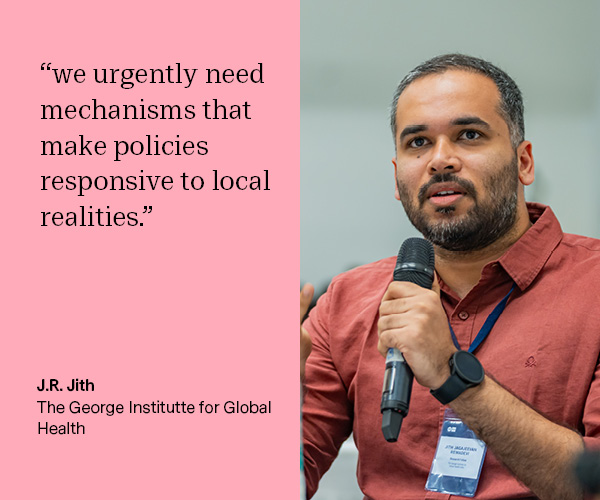
J.R. Jith, first author of the study, said: “Most policies for implementing health interventions assume a stable environment, but with extreme weather events becoming more frequent, that is no longer the reality. The lessons from Dhubri are therefore lessons for India as a whole: we urgently need mechanisms that make policies responsive to local realities. When systems are not responsive enough, it is frontline families who suffer the most; the costs they bear effectively subsidise the health system, and that is an ethical issue as much as a practical one.”
The study highlights the importance of designing health interventions around the realities of the communities they serve. Building more equitable and sustainable health systems, the authors argue, requires greater recognition of the social, environmental and relational factors that shape how care is delivered.