







Skip to content

Twitter chat on 3rd October for Launch of Supplement – Join Us!

By Natasha Salaria (London School of Hygiene & Tropical Medicine)

I am pleased to announce that @HPP_LSHTM will be hosting a Twitter chat on 3 OCTOBER using the hashtag #CommunityMNH!

Date: 3 October, 2017
Time: 2-3pm UK TIME
Location: Twitter – lead by @HPP_LSHTM

This Twitter chat will discuss the…

Content, costs, cadres for community maternal and newborn care: Launch of the Health Policy and Planning Supplement

This post has been cross-posted with LSHTM.
VIEW THE RECORDED EVENT HERE.

EVENT FOR SUPPLEMENT LAUNCH
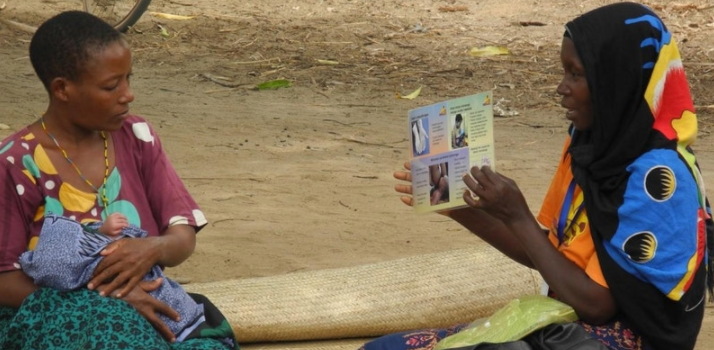
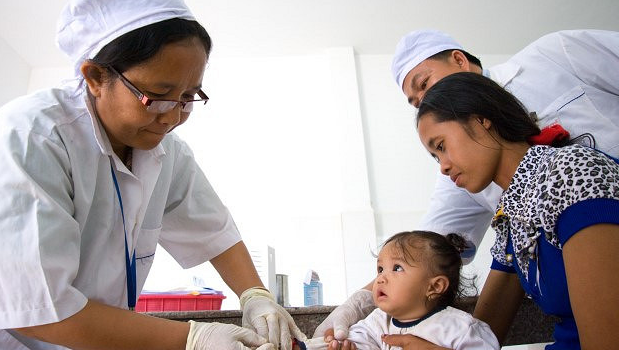
To reach universal health coverage with care at birth and prevent 300,000 maternal deaths and 5.3 million neonatal deaths and stillbirths, an important strategy is to provide home care during pregnancy…

Injecting a business perspective into routine immunization programs

By Christian Suharlim (Harvard T.H. Chan School of Public Health)

Cross-posted at immunizationeconomics.org.

Imagine you own a parking garage business. Half of your costs are associated with owning, building, and maintaining the property – a third for labor costs associated with managing the operations – and the rest for…

Spotlight systematic reviews from upcoming supplement: Building integrated HIV health systems

By Martin Mckee and Dina Balabanova (London School of Hygiene & Tropical Medicine) and Fiona Leh Hoon Chuah and Helena Legido-Quigley (National University of Singapore) 

Are integrated health systems more efficient and cost-saving or more even resilient than parallel, specialist systems? Much has been claimed for “integrated” approaches…

Frameworks to assess health system governance

By Thidar Pyone, Liverpool School of Tropical Medicine

Governance has previously been measured by assessing the performance of health indicators at the national level and has not been assessed at the sub-national level. There are various tools and frameworks for assessing governance, but no critical evaluation of these. Our…

Interrogating the evidence: The potential for social safety nets to reduce childhood violence

By Amber Peterman (UNICEF’s Office of Research – Innocenti) and Anastasia (Naomi) Neijhoft (UNICEF Mozambique)

Non-contributory social safety nets (SSNs), including cash and in-kind transfers, public works and vouchers or fee waivers, are typically designed to provide regular and predicable support to poor populations and have become a…

Partnership and politics in global health: The case of re-integrating maternal, newborn and child health

By Katerini Storeng, University of Oslo and LSHTM & Dominique Behague, Vanderbilt University, Kings College London and LSHTM

We often judge global health initiatives in terms of the funding they generate and the number of lives they save. But how does looking at the everyday practices and cultures of expertise…

Special collection for World TB Day 2017: Insights from recent health policy and systems research

By Mishal Khan (London School of Hygiene & Tropical Medicine)

Background

Tuberculosis (TB) is now the leading cause of death from an infectious disease, and in addition to its impact in terms of mortality, TB has considerable social and economic consequences for individuals. Furthermore, the long (6 to 8 month…

World Tuberculosis Day – Unite to End TB in Papua New Guinea

By Jeremy Hill (London School of Hygiene & Tropical Medicine)

World tuberculosis (TB) day is a valuable opportunity to focus on the global epidemic of tuberculosis. In London, I’ll be attending a symposium hosted by LSHTM and UCL  where the program includes the breadth of topics: from the natural…

Reducing Childhood Wasting: What Works? What Doesn’t?

John Peabody (University of California and QURE Healthcare) and David Paculdo (QURE Healthcare)

When governments look for ways to improve health care they grapple with questions of where and how best to spend scarce healthcare dollars. Urgency seems to take over effectiveness and they rarely ask what is the best…