



Skip to content

All posts tagged global health

Poor diets linked to major health and economic losses in Ethiopia and the Philippines 

New research shows improving nutrition could prevent child stunting, reduce chronic disease, and protect national income in two countries facing different stages of the nutrition transition. 

Unhealthy diets are now recognised as a leading contributor to global ill health, linked both to persistent undernutrition in early life…

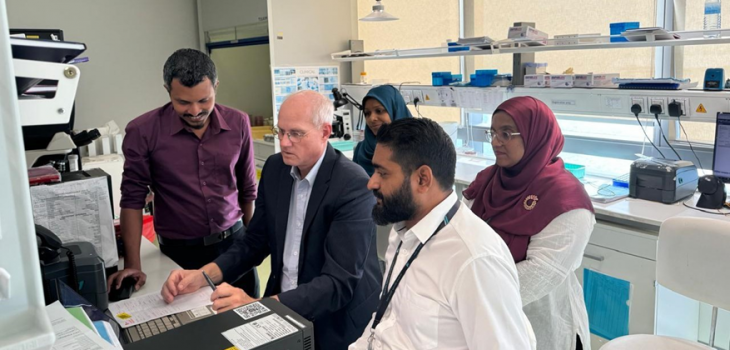
PM Modi warns of the threat from antimicrobial resistance

By Dr Catharina Boehme, Officer-in-Charge, WHO South-East Asia Region

PM Modi warns of the threat from antimicrobial resistance

In December 2025, Prime Minister Narendra Modi issued a timely warning about one of the most serious yet under-recognised global health threats: antimicrobial resistance (AMR). PM Modi alerted…

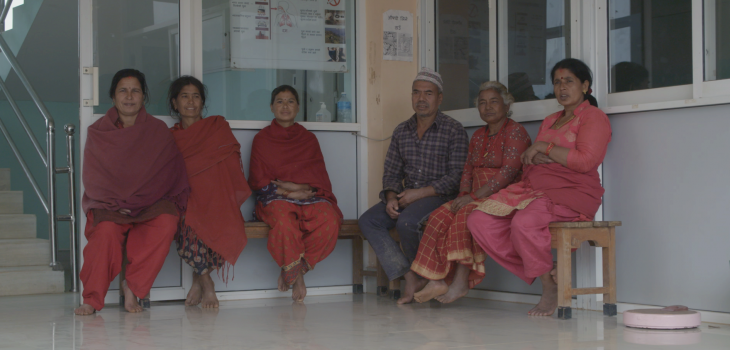
Unveiling health systems readiness for combating domestic violence: A global perspective

By Manuela Colombini1 and Satya Shrestha2

1: Department of Global Health and Development, London School of Hygiene and Tropical Medicine, United Kingdom
2: Nursing and Midwifery Program, Kathmandu University School of Medical Sciences, Nepal

When we talk about domestic violence (DV), it is not just a private matter confined within…

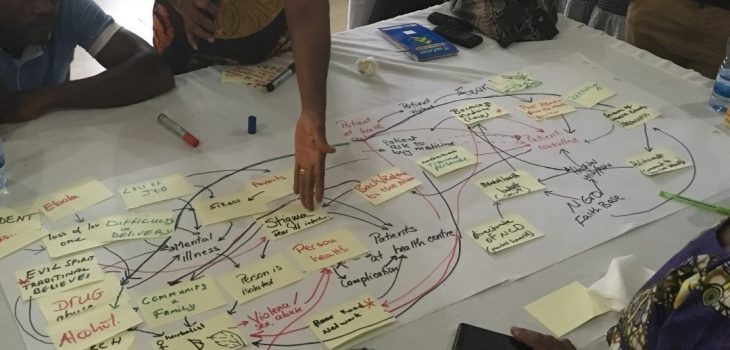
Navigating fragility? What’s the big idea?

By Alastair Ager, NIHR Global Health Research Unit on Health in Situations of Fragility, Queen Margaret University, Edinburgh.

There’s a growing interest in the concept of fragility. Initially just a new label given to ‘failed states’ to foster a more respectful form of engagement with countries marked by deep…

How can we do a better job of setting research agendas with communities?

By Bridget Pratt (University of Melbourne)

The status quo: Communities lack a say

Community engagement is gaining prominence in global health research. Growing consensus about the importance of community representation and participation for ethical research means research institutions and funding bodies now promote, or even mandate, community engagement as an…

Five years after the Ebola epidemic, are new preparedness measures sustainable?

By Michael R. Snyder (Johns Hopkins University)

With the five-year anniversary of the West Africa Ebola outbreak declaration approaching, now is an appropriate time to reflect on progress made in improving global public health preparedness. Has the international community learned the lessons of the 2014-16 Ebola epidemic? What…

The politics of alcohol and policy formulation

By Adam Bertscher, Leslie London & Marsha Orgill (all authors University of Cape Town)

Alcohol is contributing to a growing global burden of non-communicable diseases. Some of these diseases are referred to as ‘industrial epidemics’ because they are the result of social or commercial determinants of health. In other…

How economic development norms are hurting global tobacco control

By Raphael Lencucha, PhD (McGill University), Jeffrey Drope, PhD (American Cancer Society) and Ronald Labonte, PhD (University of Ottawa)

Government policy and tobacco

Why do some governments continue to support the production of harmful commodities? This question is most vexing to those striving to control what is one of the…

The need for new approaches to Global Health Aid Allocation

By Y-Ling Chi (Imperial College London), Kalipso Chalkidou (Center for Global Development) and Jesse Bump (Harvard University)

This blog is cross-posted with The Center for Global Development.

The scope of the problem

The allocation of aid has been a topic of much investigation across several different fields. In…

The Importance Of Resource Allocation For Global Health Security

By Elvis García (DrPH student at Harvard T H Chan School of Public Health)

In the latest issue of Health Policy and Planning, ‘Beyond Gross National Income: Innovative methods for global health aid allocation’, Jesse Bump and colleagues analyze the complexities of resource allocation in Development Assistance, and underscore…