










Expanding treatment for depression and anxiety could improve young people’s health and education while generating substantial economic and social returns.
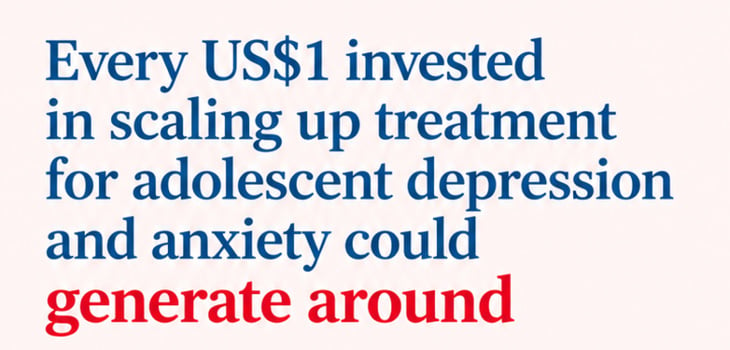
Investing in treatment for adolescent depression and anxiety could generate up to US$15 in economic and social benefits for every US$1 invested, according to research published in Health Policy and Planning.
The study, led by Kim Sweeney, examined the potential impact of expanding treatment for adolescents in Colombia and South Africa. Researchers estimated that every US$1 invested could generate approximately US$15.40 in combined economic and social benefits in Colombia and US$13.90 in South Africa.
Depression and anxiety are among the most common mental health conditions affecting adolescents, yet access to treatment remains limited, particularly in resource-constrained settings. Poor mental health during adolescence can also have longer-term consequences for education, employment and productivity.
Researchers used the OneHealth Tool and economic modelling to estimate the costs and benefits of expanding access to cognitive behavioural therapy and antidepressant medication between 2024 and 2035.
The findings suggest that the benefits extend beyond improvements in mental health. Effective treatment could help adolescents with depression and anxiety stay in education for longer, contributing to improved employment prospects, earnings and productivity later in life, alongside reductions in illness and premature mortality. The paper identifies longer participation in education and greater long-term productivity as important benefits of early investment in adolescent mental health.
The researchers say the findings strengthen the economic case for treating adolescent mental health care as a long-term investment in young people and national development, rather than solely as a healthcare cost.
However, expanding access to treatment will require investment in how mental health services are delivered. The researchers highlight the potential role of trained non-specialist providers, including school counsellors and community health workers, in delivering first-line mental health care through primary care and educational settings.
They also call for stronger health information systems that provide age-disaggregated data on adolescent mental health, treatment coverage and outcomes. Better data could help governments understand unmet need, target resources and track whether expanded services are reaching young people.
The research is published as part of the Health Policy and Planning supplement, New Perspectives on Advancing Adolescent Health and Well-being, which brings together six papers exploring approaches to improving adolescent health and well-being.