









Research highlights how better workforce planning, rural incentives and stronger governance could improve access to care in underserved communities.
The study, published in Health Policy and Planning, examines how reforms to the recruitment, training and distribution of health workers could strengthen NCD prevention and care while reducing inequalities in access to health services. The paper is part of the Health Policy and Planning and Health Systems Global (HPP/HSG) supplement, which examines how health systems can become more just and sustainable.
Meghalaya faces significant health workforce challenges. Around 80% of the population lives in rural areas, while specialists are unevenly distributed across the state, with some districts having no specialist doctors. At the same time, NCDs now account for 56% of total disability-adjusted life years in Meghalaya, up from 28% in 1990.
The researchers examined proposed reforms including dedicated Specialist, Public Health and Teaching cadres, changes to recruitment and posting practices, incentives to encourage rural service, and stronger systems for workforce planning and monitoring.
Using prospective policy analysis, the study considered the reforms while they were still evolving, allowing the researchers to identify potential barriers and explore the conditions needed for successful implementation. The analysis drew on policy documents, government and technical reports and existing research, alongside informal consultations with state health officials, workforce planners and district-level health workers.
The study suggests that dedicated specialist and public health cadres could help strengthen both specialist NCD care and preventive services. More transparent recruitment and posting systems could support a more equitable distribution of health workers, particularly in areas that have historically struggled to attract and retain staff.
However, the study suggests creating new cadres and increasing workforce numbers alone will not be enough. The potential of the reforms will depend on sustained political and financial commitment, institutional capacity, transparent implementation and greater attention to the needs of underserved communities.
Rural retention is one of the key challenges identified. Proposed measures include allowances and other incentives for rural service, but the study notes that detailed financial commitments have not yet been established. The researchers argue that incentives should be accompanied by career development opportunities, supportive working conditions and appropriate infrastructure to make rural service more sustainable.
The study also highlights the importance of looking beyond doctors and specialists. Strengthening the roles of nurses, community health workers and primary care teams could support earlier detection and management of NCDs and reduce reliance on specialist and tertiary services.
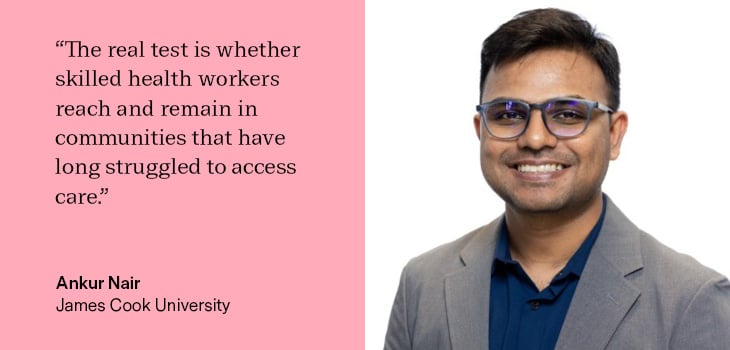
Ankur Nair, Ankur Nair, lead author of the study, PhD Researcher at James Cook University and researcher with the Health Workforce and Equity Policy Hub, said: “Health workforce reforms could strengthen NCD prevention and care, but the real test is whether they enable that skilled health workers reach and remain in communities that have long struggled to access care.”
The authors argue that Meghalaya’s experience offers wider lessons for other resource-constrained health systems facing a growing burden of NCDs. Addressing workforce shortages is not simply about increasing staff numbers, but also about how health workers are trained, recruited, distributed and supported, and whether workforce decisions respond to the needs of communities with the greatest barriers to accessing care.
The study highlights the importance of embedding equity, transparency and community participation into workforce reforms from the outset, helping health systems respond to changing health needs without reproducing existing inequalities.