








Study across four countries highlights the systemic changes needed to turn global commitments on adolescent well-being into lasting progress.
Global commitments to improve adolescent well-being are beginning to translate into action, but persistent gaps in funding, cross-sector coordination and data could prevent that progress from being sustained, according to research published in Health Policy and Planning.
The study examined early progress following commitments made at the landmark 2023 Global Forum for Adolescents, which brought together governments and partners to prioritise the health and well-being of young people. Researchers assessed how these commitments were being implemented across four different settings: Bulgaria, Colombia, Malawi and Nigeria.
While initial momentum is evident in all four countries, researchers identified structural barriers that risk stalling progress and delivering sustained improvements for adolescents. These included fragmented public systems, chronic gaps in financing and a scarcity of disaggregated data needed to understand young people’s needs, inform targeted policies and monitor progress.
The findings suggest that improving adolescent well-being requires coordinated changes across multiple systems and sectors, rather than individual programmes or interventions operating in isolation. Adolescents’ needs span multiple sectors, and progress depends on formal mechanisms that enable ministries to coordinate budgets, align planning, and share accountability.
The researchers also emphasise the importance of involving young people directly in developing and monitoring policies that affect them, with appropriate resources to enable their meaningful participation.
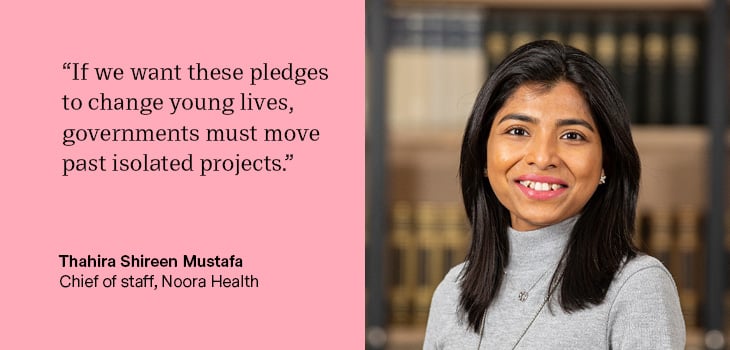
Thahira Shireen Mustafa, lead author of the study, said: “Securing political commitments on a global stage is an essential first step, but it is not the finish line. If we want these pledges to change young lives, governments must move past isolated projects and ensure sustained and predictable domestic funding, move beyond tokenistic consultation and enable genuine power-sharing with young people, and deliver stronger data systems that hold every sector accountable.”
The researchers also call for independent accountability assessments conducted at regular intervals, backed by robust national data systems that capture the nuanced realities of different adolescent age groups, and track whether commitments are being implemented and achieving their intended impact.
According to the study, building political support that can withstand changes in government, with cross-party consensus is critical to help protect investments and maintain progress over the longer term.
The research is published as part of the Health Policy and Planning supplement, New Perspectives on Advancing Adolescent Health and Well-being, which brings together six papers exploring approaches to improving adolescent health and well-being.