




By Professor Ada Aghaji
Professor of Ophthalmology and Eye Health Systems, University of Nigeria
The Global Summit for Eye Health, held in Antigua and Barbuda on 2 November 2026, marks an important advance in political commitment and financing for eye health. It secured 191 commitments across more than 115 countries, including government pledges to integrate eye health into national health systems. This builds on the WHO’s Universal Eye Health: A Global Action Plan 2014–2019, which emphasised integrating eye care across all levels of the health system, including primary healthcare. More than 40 governments also committed over US$1 billion in domestic funding.
These commitments come at a critical time. At least one billion people have vision impairment that could have been prevented or has yet to be addressed. The Value of Vision investment case estimates that an additional US$7.1 billion invested in eye care across low- and middle-income countries during 2026–2030 could generate US$199 billion in economic benefits.
The Summit has secured political commitments and funding pledges. The opportunity now is to turn these commitments into better eye care for the people who need it. Where and how resources are invested will be as important as how much is mobilised.
From commitments to stronger health systems
For the Summit’s investments to make a difference, governments must understand the barriers that prevent people from accessing effective eye care and how these arise within their health systems.
My earlier analysis of integrating primary eye care into Nigeria’s health system highlighted the importance of linking early identification of eye problems with access to affordable, quality treatment. Our subsequent research on human resources and governance identified workforce shortages and governance challenges for primary eyecare.
Investments must therefore address barriers along the entire pathway to care. This requires strengthening health-system capacity, including workforce development, effective referral pathways, appropriate financing and coordination between primary healthcare and specialist services. Clear institutional responsibilities are equally important to ensure that investments translate into sustained improvements in service delivery.
Investing where it matters most
The central policy question is how to direct new funding towards the constraints that most limit effective eye care.
Consider two districts with similarly low cataract surgery coverage. One may lack surgical teams, while in the other, surgery may be available but unaffordable. The first may benefit from workforce deployment and stronger referral capacity; the second may need subsidies or insurance arrangements that reduce patients’ costs. The same coverage problem calls for different investment decisions.
Our research on primary healthcare facility readiness in Nigeria identified gaps in equipment, medicines, service delivery and health information systems. Such evidence, alongside routine service data and patients’ experiences, can help policymakers identify priorities and develop implementation plans suited to local circumstances.
The Summit’s six eye-care accelerators offer approaches to expanding services, while the Vision Action Fund’s pledge of at least US$10 million for 24 governments provides further support. Countries can maximise these benefits by adapting the approaches to local health-system needs.
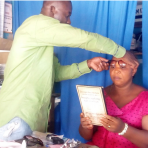
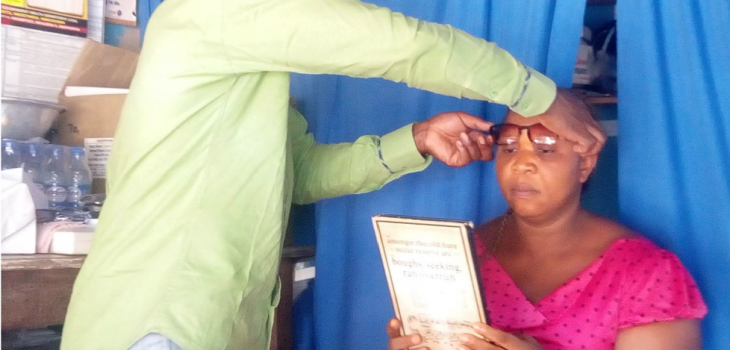
Nigeria offers an example of expansion through existing health services. Its Minister of State for Health and Social Welfare reported that more than one million people had received reading glasses through the national initiative, with a target of distributing five million pairs by 2027.
Building on these achievements means including continuing service costs, such as supplies, supervision and referrals, in routine health budgets.
Demonstrating the value of investment
The substantial financial commitments secured at the Summit present an important opportunity to improve eye health worldwide. Demonstrating their impact through measurable improvements in vision, effective coverage and equity will be essential to sustaining political commitment and future investment.
The WHO’s effective eye-care coverage targets provide a framework for assessing whether people receive care that improves their vision. Beyond counting spectacles distributed or cataract operations performed, we need to establish whether treatment was effective, affordable and accessible to those most in need.
Monitoring outcomes and inequalities by sex, location and socioeconomic circumstances, using routine health information and periodic population surveys, can help identify where investments are working and where gaps remain.
By November 2027, governments and partners could review progress against their Summit commitments, examining expenditure, service expansion and improvements in effective coverage and equity. Findings should guide subsequent financing and implementation decisions.
The Summit has created an important opportunity to improve eye health worldwide. Its lasting contribution will be reflected in stronger services, better outcomes and reduced inequities. If eye health is presented as an investment, we should be prepared to show what that investment changed.