


Skip to content

All posts in low-income countries

Health services in India’s flood-prone communities rely on invisible support, study finds

Research in Dhubri, India, shows how seasonal flooding, unpaid family labour and poorly adapted community participation shape the delivery of nutrition services. 

A new study has highlighted how local health systems in Dhubri, Assam, are shaped by the Brahmaputra River, informal support networks and the everyday realities of communities living…

Global review explores how politics shapes health systems

Scoping review identifies growing use of political economy analysis to help design fairer and more effective health systems

A new review has found that understanding politics, power and institutions is essential for explaining why some health policies succeed while others fail, highlighting the growing role of political economy analysis in…

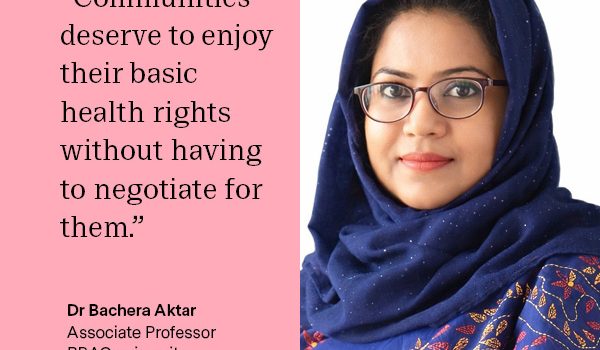
Informal governance can help deliver health services but may deepen inequalities, study finds 

Bachera Aktar’s research shows how people in informal settlements in Dhaka, Bangladesh, access public health services through local networks and community relationships, and how these arrangements can both help address and deepen existing inequality. 

When formal health systems do not reach everyone, people often rely on personal relationships…

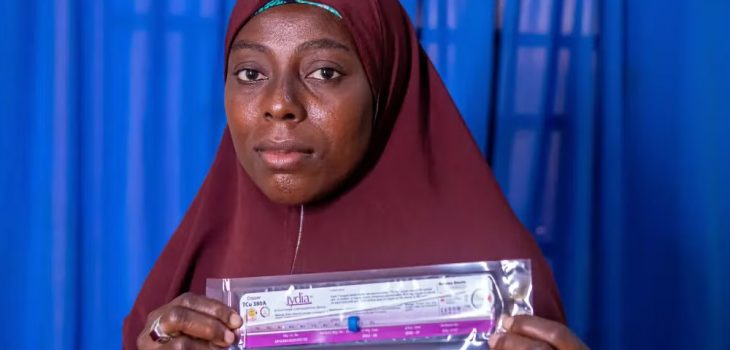
Major Nigerian radio campaign failed to sustain rise in contraception uptake, study finds 

A major radio campaign promoting family planning in Northern Nigeria failed to produce lasting increases in contraception uptake despite reaching millions of listeners.

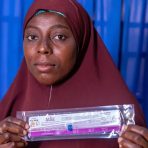
A woman holding her contraceptive at the Badarawa Primary Health Care Centre in Kaduna, Nigeria, © UNPFA Nigeria / Seyi Fashina

The study was led by&nbsp…

Poor diets linked to major health and economic losses in Ethiopia and the Philippines 

New research shows improving nutrition could prevent child stunting, reduce chronic disease, and protect national income in two countries facing different stages of the nutrition transition. 

Unhealthy diets are now recognised as a leading contributor to global ill health, linked both to persistent undernutrition in early life…

Unpacking power: Why intersectoral collaboration in LMICs needs more than just good intentions

By Praveenkumar Aivalli, Post Doctoral Research Fellow, University College Dublin, Ireland

How does power shape the success—or failure—of intersectoral collaboration in global health? That’s the question at the heart of my doctoral journey. Our recent realist review dived into how power dynamics influence intersectoral collaboration (ISC) during…

Establishing hospital accreditation programs sustainably in LMICs: Is it a missed opportunity to improve quality and patient safety?

By Dr. Dilantha Dharmagunawardene1, Prof. Reece Hinchcliff1, Prof. David Greenfield2, Dr. Mark Avery1 and Ms. Paula Bowman3

Department of Management, Griffith Business School, Griffith University
School of Population Health, University of New South Wales
School of Public Health and Social Work, Faculty of Health, Queensland University of Technology

Background

There…

Using an optimization tool to evaluate possible packages of community health interventions in Somalia

Robert J. Montgomery1,2, Elaine Scudder2, Caitlin Tulloch2, Muna Jama2, Naoko Kozuki2 & Baris Ata1

University of Chicago, Booth School of Business
International Rescue Committee

Background

As more scrutiny is applied to foreign aid dollars, whether done carefully or carelessly, it becomes increasingly important that we correct the misconception that…

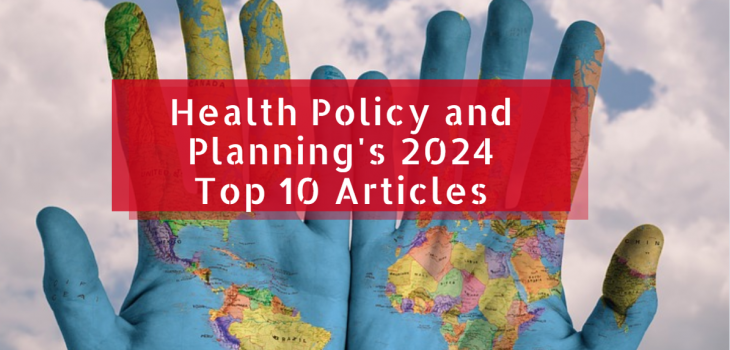
Health Policy and Planning’s Top 10 articles in 2024

By Natasha Salaria (London School of Hygiene & Tropical Medicine)

Health Policy and Planning is an open access journal publishing health policy and systems research focusing on low- and middle-income countries. The journal consists of four sections; Health Systems Research, Health Economics, Health Policy Processes and Implementation Research and…

Growing up with cash transfers: Can prolonged financial support during childhood improve mental health?

By Sara Evans-Lacko (Care Policy and Evaluation Centre, London School of Economics and Political Science) and Mauricio Avendano (Unisanté, University of Lausanne)

Mental health is profoundly affected by the social and economic conditions in which people live. In low- and middle-income countries (LMICs), young people’s mental health…